Pepper Garden – Fall 2014 Redoux
For my homegrown peppers garden a la Fall 2014, there have already been changes. It’s amazing how fast plans can go out the door and vanish! But, I have new pepper plants in place, so here’s the (new) lineup.
Before I list the peppers, I’ll note that my plans changed because of two things. The first is my greenhouse and the second is the Fall/Winter weather predictions for South Florida. It’s supposed to get rather chilly early on, and a cooler Fall/Winter overall, compared to 2013.
Fall 2014 Pepper Lineup, Take 2
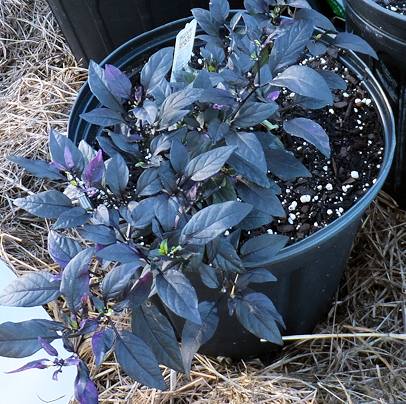
Purple Flash, Early September 2014.
Given the above, my plans changed to buy some starter plants and not grow as many of the seeds (waiting until Thanksgiving to plant those). So here goes for what’s now on deck.
Purple Flash: This is a pepper with purple foliage. The new leaves are green, kind of variegated. As they get older, they turn a lovely dusky purple. Peppers start as purple, then turn red as they mature. Since I bought it as a starter, I picked off all the peppers after I transplanted so as to de-stress the plant. I have it planted in a 5-gallon container.
Cayenne Yellow: A cayenne pepper, only with peppers that mature to a lemon-color, instead of red. It’s supposed to be just as hot as a regular cayenne. I have it cohabiting with a pepper called Cajun Bell in a 12-gallon grow bag / smart pot.
Cajun Belle: This is interesting; it’s a hybrid bell peppers that supposedly is a little on the spicy side. Who could resist — not me, for sure! So I planted it with Cayenne Yellow, as well as an Italian basil plant.
Dragon Cayenne: The name drew me in, so I figured I’d grow it and compare to the Yellow Cayenne plant. It’s sharing a 20-gallon smart pot with a Tabasco pepper and some cinnamon basil.
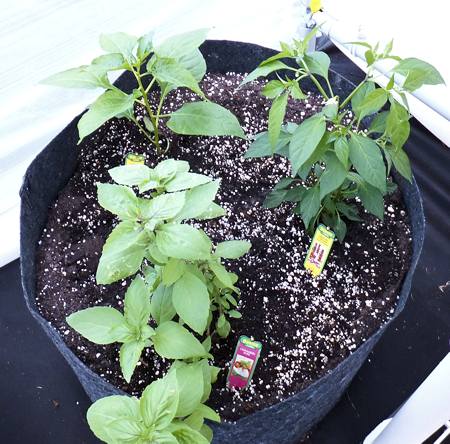
Tabasco (upper left), Dragon Cayenne (upper right) and Cinnamon Basil (foreground). These were just planted 3 days ago.
Tabasco: I don’t recall if this one had a specific variety name, but I picked it to grow for two reasons. First, if I’ve ever grown Tabasco peppers, it’s been years and years, so why not try them? Second, the plant was so pretty! So, in the grow bag with the Dragon Cayenne and basil.
Habanero: No variety listed. I almost didn’t get this starter plant, because habanero peppers typically take a long time to fruit, and it’s already the middle of September. But, I have a greenhouse, so what the heck — live a little! (And hopefully the plant will live more than a little, LOL.) I haven’t decided on where to put this one yet.
Red Bell Pepper: No specific variety name. I didn’t have any regular bells as a starter plant so thought I’d add this one in. It’s also waiting doe its home….which I suspect will be with the habanero. And more basil, or perhaps oregano.
For seedlings that have already popped their heads up, I have:
Fooled You Jalepeno: A no-heat jalapeno pepper, which I have never grown before. It’s a hybrid, and I’ll see how “no heat” it turns out to be. I am growing this mostly for my husband David, who prefers the no-heat.
Trinidad Perfume: This was in my original lineup, and it’s a no-heat habanero. This one is really for me, since I have no idea what a habanero really tastes like — it’s usually all I can do to fan my mouth and look around for ice cream to cool the burn when I eat the regular ones. 😉
Flamingo: A pretty bell pepper that changes colors as the pepper matures. This one is sweet (unlike Cajun Belle). Looking forward to trying it.
Tri-Fetti: This is one of my old (5+ years) seeds. I planted quite a few, not knowing how many would germinate (if any). I see at least one of them coming up, and I think a second one as well. The plants are gorgeous, and I have a hard time finding the seeds, so I am glad that I’ll have some plants and be able to save some new seeds. These are mostly ornamental, but the peppers are edible – and hot!
Orange Thai Hot: These are also from the 5+ year old seed batch, but they aren’t showing any signs of germination yet. Still early days, though, so I’ll wait another couple of weeks to see if I get anything from them.
That’s it for now, but I’ll keep you posted on their progress.
A Bounty of Peppers!
I’ve got a bounty of peppers now, of bell, sweet and hot. The peppers are in full production mode! I took a quick break to walk out to the garden for a harvest.
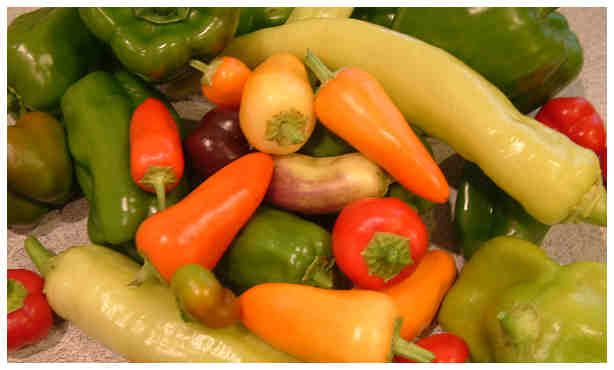
Bell, Sweet and Hot Peppers (Click for larger image)
Once I got the peppers inside and on the counter, I thought they looked really pretty, so I took a photo. And keep in mind, this isn’t all of the peppers — many have already found their way into our tummies. Not to mention there are a ton still on the plants!
In the photo I have Park’s Sweet Banana, Park’s Sweet Pickle, Mini-Belle (in purple and red), Redskin (mostly green), a name-unknown bell and a Cambuci (very hot!). I’m waiting to taste the Cambuci before writing up a post on it, but it’s a really pretty plant and pepper.
A bounty of peppers indeed!
Still Planting Peppers
I’ve got another round of peppers to plant this weekend. Here in Florida, there’s still plenty of time to get in a second crop. So what’s on my agenda? Here’s what I have in mind, but it’s always subject to change.
- Datil
- Aurora
- Purple Jalapeno
- Jaloro (yellow jalapeno)
- Redskin (again — this is one nice bell pepper!)
- Starburst (ornamental pepper)
- Giant Anconcagua (again — absolutely huge sweet peppers!)
I might also go with another round of Pretty Purple Pepper and one of the Thai Hot varieties. I’m also debating adding a larger bell pepper to the list, or maybe Mohawk (the companion to Redskin).
So if you live in a climate where it’s warm (days at least in the 70’s) on up through October or November, come on and plant some more seeds! Or at least see if there are any plants for sale available nearby.
And for the rest of you who already have peppers out in the garden — may you have a bounty of peppers as well!
Redskin Pepper in the Garden
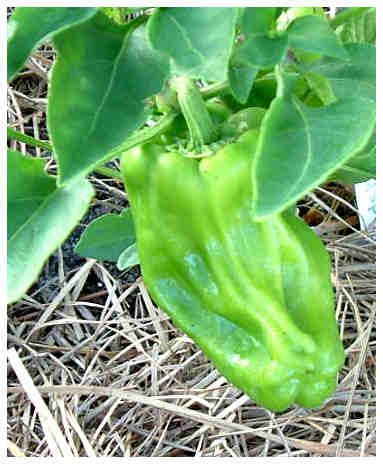
I decided to try the Redskin pepper, even knowing my track record with bell peppers hasn’t exactly been stellar. But I have to admit to being impressed with Redskin. Finally, a bell pepper that actually produces for me in South Florida!
Planting Redskin Pepper
 I had to plant this versatile pepper from seed, as there were none in the local garden shops.  The plant started out a little spindly at first, but started growing nicely once in the garden.
Given my luck with bell peppers, I planted 4 Redskins, hoping at least 1 would produce some peppers. Whoa! They all are producing nice little bells.
Now Redskin doesn’t grow as large as traditional bell peppers, but it’s a great “personal size” snack. My peppers are around 4″ long and maybe 2.5″ wide. The taste is quite pleasing, even when green. And speaking of color, this pepper is red when fully ripe.
Low-Growing Pepper
This pepper is a low growing pepper — wider than it is tall. This makes it fantastic for growing in containers! In fact, I have 3 of my Redskins in containers and only one in the ground (and yes, they do grow a bit taller in the ground).
For someone who traditionally cannot grow bell peppers, this one is thriving and gets an “A” in my book! Looks to me like I will have plenty this year. So if you’ve been having problems growing bell peppers, this is one variety I recommend you trying.
