How Long Do Pepper Plants Live?
How long do pepper plants live, anyway? Are they annuals, perennials or somewhere in between? Can you grow them indoors in the winter? Let’s take a look at the life of a pepper plant.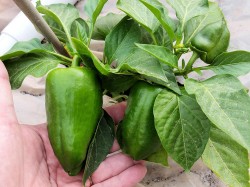
Note: In the years since I have written this post I have had more experiences with keeping pepper plants going — here’s my new post. (Read this one first, though, because it has additional information.)
Pepper Types (Species)
There are five main species of peppers:
- Capsicum annuum:Â Includes bell, sweet and many standard chile peppers like ancho, jalapeno, cayenne and more.
- Capsicum chinense:Â Includes datil, habanero and scotch bonnet peppers.
- Capsicum frutescens:Â Includes tabasco and thai peppers.
- Capsicum pubescens:Â Includes the South American rocoto peppers.
- Capsicum baccatum:Â Includes the aji peppers.
It’s important to know the species, as some are longer-lived than others. All pepper plants can be grown as annuals, but a few species can be perennial, provided they are in very warm, tropical climates.
There’s one pepper that seems to be cross-species, and that is the naga / bhut jolokia pepper. Originally called Capsicum frutescens, DNA testing has found some Capsicum chinense genes as well.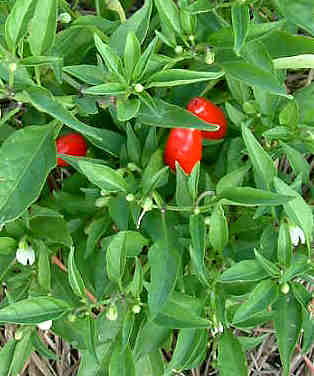
Capsicum Chinense as a Perennial
The Capsicum chinense peppers can live several years, providing they are in a warm climate. In theory, this means you can grow this species in a warm greenhouse as a perennial.
I’ve grown habaneros almost perennially here in South Florida, but I’m afraid that some of our cold snaps have done them in. This year I am trying habaneros and datils in containers, so that I can move them into the house (well, garage at any rate) when the temperatures fall below 45 degrees.
Capsicum Annuum
Your average pepper plant belonging to the species Capsicum annuum is generally grown as an annual. Although I have had some pretty long-lived jalapenos, they eventually get woody and die off.
I’ve never tried pruning a jalapeno, though, to see if I can revitalize it — that’s something I’ll have to try this year.
Although you really can’t grow them as a true perennial, Capsicum annuum can have an extended season. If you’re growing your pepper(s) in a container, you can try moving them indoors when the weather cools down. Just keep in mind that your pepper still needs plenty of sunlight; without sunlight, all the warmth in the world won’t extend your pepper’s life. That may mean a combination of south-facing window along with some supplemental light (grow lights).
Other Pepper Species
The same general rules apply to the other species; they need warmth and plenty of sunlight in order to keep growing. In their native tropical environments, the plants can live multiple years. But even in South Florida, they won’t necessarily live all year around — we do get chilly weather, and even as I write this, I’m expecting freezing temperatures tomorrow night.
So how long do pepper plants live? While they may not be perennial in the sense of living years on end, there are varieties that can grow several years — if you have the right climate.
Additional Reading
You might enjoy these related posts on peppers:
